

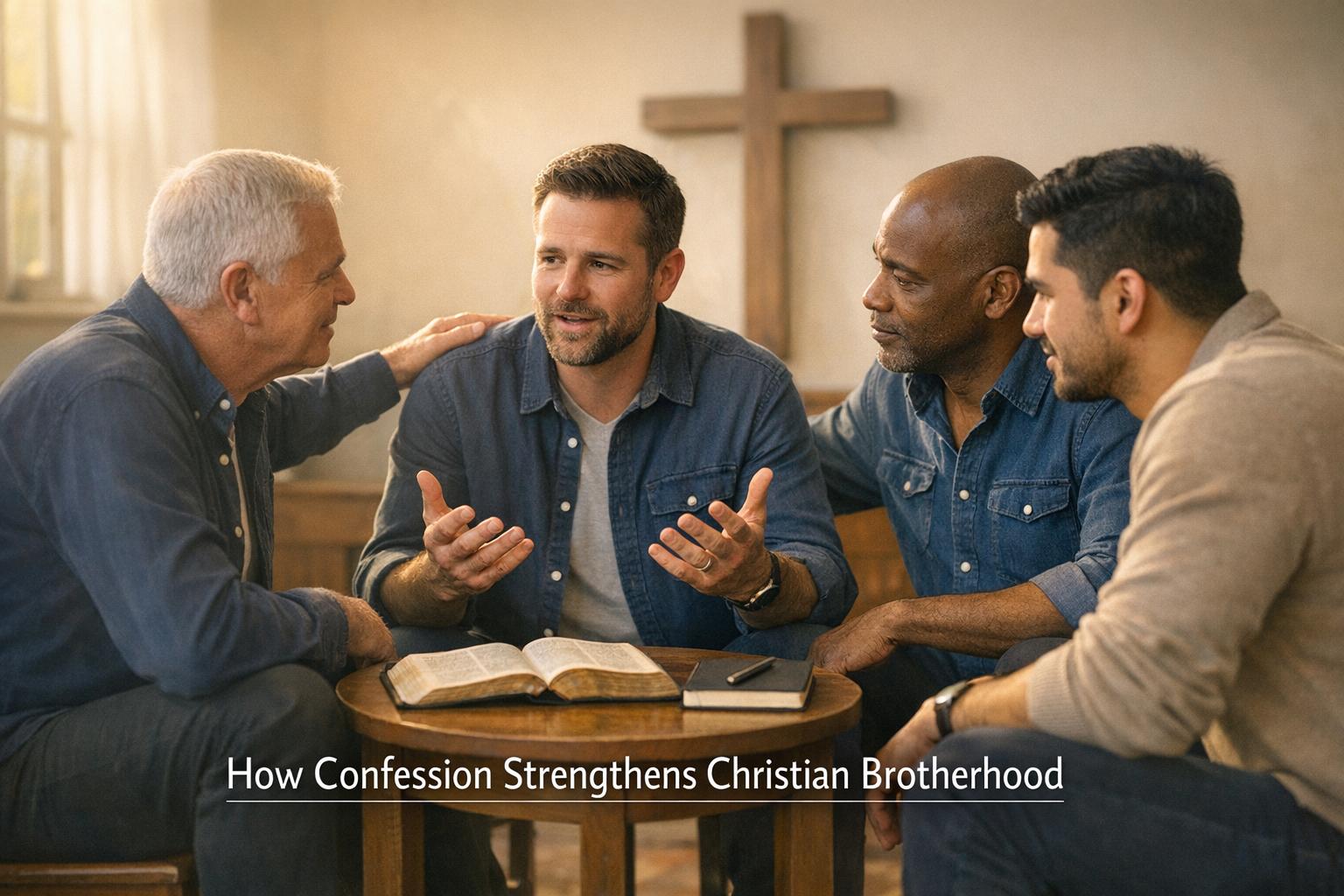
Confession isn’t just about admitting wrongdoing – it’s a way to build stronger connections within the Christian community. Sharing struggles with trusted believers, as encouraged in James 5:16, breaks the isolation caused by sin and leads to healing. It’s not about informing God but about growing spiritually and forming deeper bonds with others.
Key takeaways:
- Biblical Basis: James 5:16 and 1 John 1:9 emphasize confession for healing, forgiveness, and spiritual cleansing.
- Practical Steps: Prepare your heart, find a trusted group, confess with humility, and respond to others with prayer and support.
- Benefits: Confession replaces isolation with connection, encourages honesty, and strengthens prayer and accountability within the community.
Regular confession transforms relationships, fostering grace, trust, and shared spiritual growth. By creating safe spaces and consistent habits, Christian brotherhood thrives as a place of mutual support and renewal.
What the Bible Says About Confession
The Bible emphasizes confession as a key part of healing and building strong relationships within the Christian community. Two specific passages highlight why confession is so important for fostering genuine fellowship and spiritual growth.
James 5:16: Confession Leads to Healing
James 5:16 ties confession directly to healing: "Confess your sins to one another and pray for one another, that you may be healed." This isn’t about following a rigid set of rules – it’s about fostering genuine connections within the community. As Meg Bucher notes:
"Confessing our sins to each other isn’t a legalistic requirement but a product of communal fellowship that produces freedom in accountability" [7].
Confession breaks down the walls that keep us isolated. Pastor John Piper explains it clearly: "Christian community won’t be marked by secretiveness" [7]. The healing James writes about emerges when we stop pretending and invite others to pray for us and support us. Trinity Church CDA beautifully describes this process: "In the knowledge of God’s favor I can approach another brother or sister for help, for encouragement, for accountability" [8].
This passage also sets the stage for understanding how confession ties into forgiveness and spiritual renewal, as further explained in 1 John 1:9.
1 John 1:9: Forgiveness and Freedom
First John 1:9 provides this promise: "If we confess our sins, he is faithful and just to forgive us our sins and to cleanse us from all unrighteousness" [9]. This verse highlights two key outcomes of confession: forgiveness and spiritual cleansing [10].
Confessing to God brings forgiveness and purifies the soul, but opening up to others has a unique power. It breaks the grip of secrecy that often allows sin to thrive. Pastor Taylor Jensen explains: "When we are vulnerable and bring our sin to the light of another human being, the darkness’s power breaks, and the mask comes off. We become ourselves again" [2]. He goes on to say: "Confession is not for God. It is for us… Confession is the tool God uses to cleanse our hearts again" [2].
Confession also provides psychological relief. Letting go of the fear of being "found out" offers a sense of freedom, allowing you to stand confidently in the knowledge that you are accepted despite your flaws.
Prepare Your Heart Before Confessing
Before opening up to others, take some quiet time with God. Ask the Holy Spirit to guide you in truth and love. This process isn’t about beating yourself up but about honest self-reflection. Use biblical principles, such as the Ten Commandments or common struggles like envy, lust, or anger, to examine your heart [11]. If you notice feelings like defensiveness or withdrawal, they might be pointing to unconfessed sins [11].
Adele Calhoun captures this well:
True repentance means we open the bad in our lives to God… We tell it like it is – without rationalization, denial or blame – to the only person in the universe who will unconditionally love us when we are bad [11].
The goal is honesty, not image management.
Find a Trusted Group for Confession
Not every setting is suitable for sharing deeply personal struggles. Look for a group of men who understand the challenges of life and can offer support without judgment [3].
An example of this kind of fellowship comes from pastors Ray Ortlund, T. J. Tims, and Sam Allberry. They meet weekly in a space they call "The Wardrobe" to confess and pray together. They describe it as:
a gateway into a better world [3].
Organizations like Hill Cities also provide similar spaces, where men can meet regularly to share openly. These gatherings focus on listening rather than fixing, encouraging members to appreciate each other’s courage [12]. Building trust takes time – Bill Search explains:
It takes weeks if not months before most guys will really open up [12].
Even short, consistent meetings (like 30 minutes weekly) can help make this practice sustainable [13]. Confess with Clarity and Humility
When confessing, be specific about your sins. As Dietrich Bonhoeffer puts it:
In confession, the Gospel’s light breaks the heart’s darkness [1].
Avoid making excuses or downplaying your actions. True humility means risking your pride and openly admitting your need for grace [3]. Bill Search points out:
If you want guys to confess sin, you’d better be prepared to do it. … Most men hide because they are afraid of rejection [12].
sbb-itb-cb63123
How to Respond When Others Confess
When someone confides in you about their struggles, your reaction plays a crucial role in strengthening the bond between you.
Pray specifically for forgiveness and cleansing through Christ’s sacrifice, emphasizing the reality of His redemptive power. This moment is also an opportunity to intercede for their ability to overcome challenges and remain steadfast when faced with temptation [14]. After the prayer, gently ask if they need additional support or assistance [14].
Pastor Ray Ortlund offers wise counsel on this:
When we know our own depravity, it’s hard to be surprised at someone else’s [3].
Avoid diminishing their feelings by saying things like "it’s no big deal", as this can invalidate their struggle. At the same time, steer clear of shaming them – remind them that no sin is beyond the reach of Christ’s sacrifice [14]. Reassure them of their identity in Christ, highlighting the truth that they are cleansed and renewed through Him [14][4].
Once prayer has set the foundation, help guide them toward ongoing growth and accountability.
Support Growth Through Accountability
True transformation often requires more than a single conversation. Accountability provides the structure needed for lasting change. Honest confession builds trust, but consistent follow-through deepens that connection. Zachary Lee, Associate Home Groups Minister at The Village Church, advises:
Overwhelm them with grace! Encourage them in the gospel and in how much Christ loves them [15].
Start by actively listening to their concerns and asking thoughtful questions before offering advice [3]. If they need help, assist them in setting clear boundaries or finding practical resources for recovery [14]. Accountability isn’t a one-time effort – it’s about establishing regular check-ins to track progress and offer encouragement [15][16].
Effective accountability recognizes the individual as a complex person – a "sufferer, sinner, and saint" all at once. This approach acknowledges their struggles, affirms their identity in Christ, and addresses their sins with care [17]. Follow up regularly, remembering their challenges and checking in to see how they’re navigating their journey. This ongoing support helps carry their burden and reinforces the bond between you [3].
How Confession Changes Christian Brotherhood
Confession isn’t just about personal relief – it’s about reshaping the very fabric of Christian brotherhood. By leaning into the practice of confession and responding with grace, communities can move from isolation to deep, meaningful fellowship.
One of the first and most noticeable changes is the breaking of isolation. Sin has a way of pushing people into secrecy, creating a barrier between individuals and their community. Confession acts as a lifeline, pulling people out of that darkness and back into genuine relationships. This shift from isolation to connection was touched on earlier, but it’s worth emphasizing: confession restores fellowship in a way nothing else can.
But confession doesn’t stop at personal restoration – it also fosters equal transparency. It strips away the false hierarchies that can creep into Christian communities. Kristen Wetherell captures this perfectly:
honest confession melts away the mirage that certain people are ‘better Christians.’ It enables us to live on the level ground of the cross, rather than in the false worlds of comparison, guilt, pride, and condemnation [5].
This level playing field replaces unhealthy comparison with grace-driven relationships, where authenticity triumphs over appearances.